
Healthcare sales is different. Your motion should be too.
Four buyer landscapes. Real relationships in each.




 shiftmed

 Elektra Health


Healthcare doesn't sell like other markets. The buyer, the user, and the person actually deciding are almost never the same.
The buyer signs the contract. The user touches the product. The decision-maker — usually a clinical leader, a service-line head, or a committee a layer above — weighs patient care, financials, clinical risk, and operational drag in the same conversation. These are matrixed organizations that don't map neatly onto an org chart, and mapping them is the entire job. The deck and the demo are the smallest part of it.
Money and brand don't decide it. The biggest checks and the loudest logos still lose pursuits to the smaller vendor with a better answer for patient outcomes. Healthcare buyers pick what improves care first and is defensible second — and we've spent fifteen years inside that calculus, running your motion against it, not against a SaaS playbook from the last fundraise.
What we do, plainly.
What you're actually hiring when you hire Bayshore.
Recent engagements.
Built a price-transparency GTM motion from a standing start.
An enterprise healthcare-data company brought a price-transparency offering into a market that hadn't formed yet — payors, employers, and providers were all still sorting through the new CMS data, and no one had a category-defining motion. We designed the segmentation, positioning, and outbound playbook, ran the first reference cohort, and handed off a live pipeline to the commercial team.
Closed a top-25 IDN — $12M ARR.
A clinical workforce platform had been chasing a top-25 health system across multiple quarters. The cycle had stalled at executive review. We embedded as a deal sprint, brought IDN-side relationships into the room, retooled the value story for the system's specific workforce gap, and stayed through MSA close.
Opened a flagship women's health provider — $3M+ ARR.
A Series A women's health startup needed an anchor provider relationship to validate its model with payors. We mapped the target landscape, opened the door at one of the country's largest independent women's health providers through clinical-side relationships, ran the procurement playbook alongside the founder, and closed.
The buyers other consultancies can't reach. We can.
A boutique advisory's actual product is its network. Two decades inside healthcare has built ours into 220+ active senior executives across health systems, plans, MSOs, IPAs, ACOs, and risk-bearing groups — current relationships, not a stale rolodex. When you hire Bayshore, the network comes with the playbook.
Two operators with forty healthtech engagements between them — not consultants.

Adam Teitelman
Healthcare operator and investor with fifteen-plus years across value-based care, clinical care-in-the-home, and AI-enabled health tech. Senior Director, Providers & Payors at myLaurel. Active GTM advisor to 20+ healthtech companies — Koda Health, GenHealth.ai, Ellipsis, Diagnostic Robotics, ShiftMed, FitOn, Heartbeat, and others.
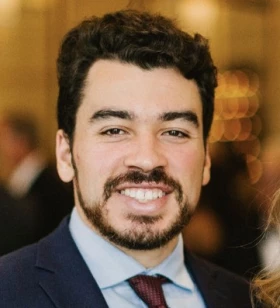
Mike Maseda
Founder and 2x chief of staff. Head of Sales & Ops at GenHealth.ai (Agentic OS for healthcare). Previously co-founder & CEO of Circadios (sleep disorders), Reside Health, Woundtech, Co-Chair Embarc Collective. Builds the systems behind the motion — CRM, RevOps, forecast cadence, hiring scorecards.
Five principles we don't compromise on. Ever.
Operators, not consultants
We've carried bags, hired AEs, written board decks, and lost deals. Every engagement is led personally by Adam or Mike — not delegated to associates.
Inside the work, not above it
We sit in your pipeline reviews, ride along on demos, and lead live deals. The motion gets built where the motion lives — your CRM, your calls, your team.
Aligned on outcomes
Pipeline coverage, cycle time, closed-won, ramp-to-quota. If we don't move them, we don't get the renewal. Misalignment is by definition our problem.
Healthcare-specific, always
Healthcare buyers don't behave like SaaS buyers. We bring fifteen years of scar tissue across IDNs, plans, post-acute, and digital health — not a generic playbook.
Hand the bag back
The goal is your team running the motion without us. Every engagement has a written handoff plan from week one — and we mean it when we say it's time.
Which one matters most for you?
30 minutes. No deck. We'll tell you which principle is the one to lean on for your situation — and whether we're the right partner for it.
Book a consultation →Things founders ask before an engagement.
If yours isn't here, the consultation call is free — we'd rather answer it directly. Most calls run thirty minutes and end with a clear yes or no on fit.
What stage of company do you typically work with?
+
Most engagements are seed through Series C, with a heavy concentration at Series A and B — the stages where founder-led sales has hit a ceiling and the team needs a real motion. We'll also take on later-stage work for specific deal sprints or RevOps fixes, but rarely full rebuilds.
Do you take equity in lieu of cash?
+
For early-stage retainers, sometimes — typically a hybrid of cash and warrant coverage. We're operators with conviction, not a fund, so we'll only do this when we'd be willing to write a check ourselves.
How fast can we start?
+
Consultation engagements typically kick off within two weeks of contract. Full embedded rebuilds are usually a 3–4 week ramp. We hold one engagement slot open per quarter for time-sensitive deal sprints — ask if you're chasing a specific procurement deadline.
How do you price?
+
Project work is fixed-fee against scope. Fractional retainers are monthly with a 12-month minimum. Deal sprints are flat-fee plus a closed-won kicker. Pricing tracks roughly to the cost of one VP Sales hire — we're explicitly cheaper than the wrong full-time hire, and explicitly more expensive than a junior consultant.
Where are you based and do you travel?
+
Tampa and San Francisco. We travel for material moments — kickoffs, key pursuits, exec-sponsor meetings, board prep — and we work remotely with your team the rest of the time. Travel is included in retainer pricing.
Eleven months in and your enterprise deal is still stuck at procurement?
Most healthcare sales orgs aren't broken because the team is bad. They're broken because the motion was built for the last product, the last buyer, the last fundraise.
We've seen it — and rebuilt it — forty times. The first call is thirty minutes, no deck, and ends with a clear yes or no on fit.
hello@bayshore.health
For consultation calls, references, or specific deal-sprint inquiries.
Tampa, FL
Where the practice is anchored. We travel for kickoffs, key pursuits, and exec-sponsor meetings — wherever the deal is.
30 minutes. No deck.
The first call ends with a clear yes or no on fit. We'll send references and a sample deliverable beforehand if it helps.